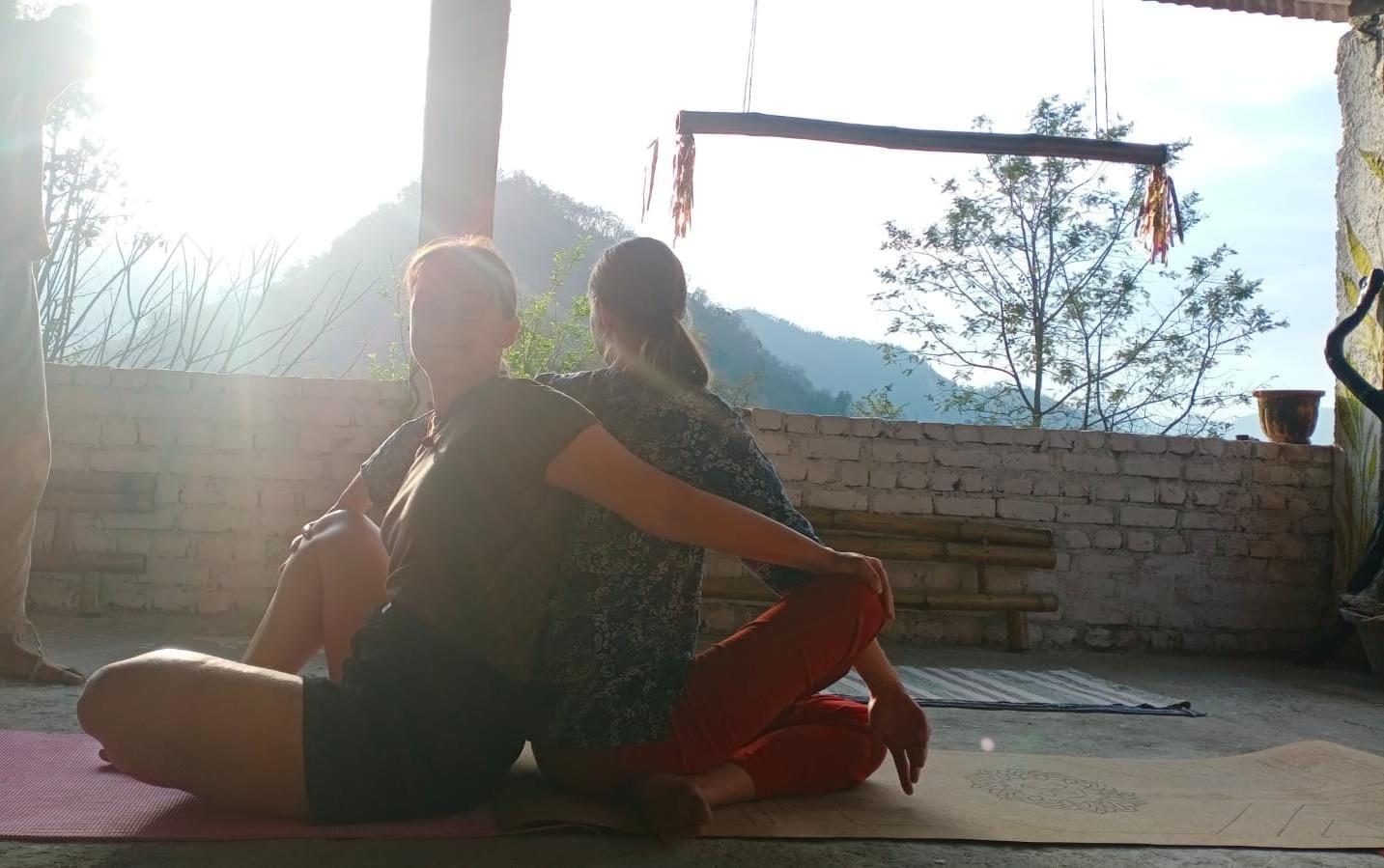
Coming from Germany
Yoga teacher training in India for German students
SHORT ANSWER
German students travel on India's e-Tourist visa, about US$25 for 30 days. Be clear on one point before booking: a 200-hour training does not meet BDY standards, which require 720 hours over four years, and it will not qualify you to teach Krankenkasse-reimbursed prevention courses in Germany.
Visa and fee information reviewed
Recognition
Will a 200-hour from India be recognised in Germany?
READ THIS BEFORE YOU BOOK
This is the section we would rather you read before booking than afterwards. A 200-hour training from India — ours or anyone's — does not meet the BDY standard and does not make you eligible to teach ZPP-approved, Krankenkasse-reimbursed prevention courses. That route requires a BDY-recognised training of 720 hours over four years, and there is no shortcut, conversion or top-up from a 200-hour that we are aware of. What a 200-hour does give you is a genuine international qualification, accepted by studios in most countries and by Yoga Alliance for individual registration, and a foundation that will stand you in good stead if you later commit to the German route. If your plan depends on Krankenkasse work, do the German training instead and do not spend a month in Rishikesh expecting it to count. We would rather lose the booking than have you find this out in October.
BDY (Berufsverband der Yogalehrenden in Deutschland)
Germany's principal professional body, founded 1967, with over 4,600 members. Its standard is 720 hours of instruction across four years, with written, oral and practical examination.
ZPP / Krankenkassen
The central review office that approves prevention courses. Approval is what allows a teacher to run Hatha-Yoga courses that health insurers reimburse — the main paid teaching market in Germany.
Visa
Which Indian visa German students need
The 30-day e-Tourist visa is sufficient for a 24-day course, but the one-year version costs little more and removes the timing risk.
| Visa | Fee | Notes |
|---|---|---|
| 30-day e-Tourist visa (July–March) | about US$25 | — |
| 30-day e-Tourist visa (April–June) | about US$10 | — |
| 1-year multiple-entry e-Tourist visa | about US$40 | Worth it for the margin |
What catches German students out
German passports get the standard rate rather than the reciprocal surcharge applied to some nationalities, so the fees above are genuinely low. The real risk is the 30-day window against a 24-day course — allow for a delayed flight and a night in Delhi at each end, and the margin disappears quickly. Apply at least a week ahead; the authorisation normally arrives in 72 hours but not always.
Fees change and vary by passport — verify at indianvisaonline.gov.in, and see visas and arrival.
Getting here
Flights from Germany
Routes
Frankfurt and Munich fly direct to Delhi; Berlin, Hamburg and Düsseldorf connect via Frankfurt or a Gulf hub.
Typical fare
€500–€850 return, higher around Christmas and the summer holidays
Flying time
About 7.5 hours direct from Frankfurt, 12–15 hours with a connection
From Delhi it is a 45-minute flight to Dehradun or roughly six hours by road. We can arrange the pickup either way.
Best months to come from Germany
September to November and February to April. October in particular suits the German autumn holidays, and the weather here is at its best.
Paying from Germany
We price in US dollars, so the euro cost moves with the exchange rate. SEPA transfers do not reach us directly — ask before sending one, and pay by card unless we have agreed otherwise.
Also worth knowing
Three things that apply only to German students
What people actually do instead
The common German path is to treat a 200-hour in India as the personal-practice year — a month of immersion that settles whether you want this at all — and then begin the four-year BDY route at home having already decided. Several of our graduates have done exactly that, and none of them regard the month as wasted.
Bildungsurlaub almost certainly will not apply
Educational leave is granted per Bundesland and against approved providers. A yoga school in Uttarakhand is not on any of those lists, so plan on using annual leave rather than assuming Bildungsurlaub covers it.
Freie Yogalehrer work is a different question entirely
Teaching privately, in a studio or on retreats carries no BDY requirement — the 720-hour standard binds the Krankenkasse-reimbursed prevention market, not yoga teaching as such. If your ambition is studio and retreat teaching rather than insurance-funded courses, a 200-hour is a normal and sufficient starting point in Germany as everywhere else.
Coming from Germany?
Ask us whether this qualification does what you need it to do at home. We would rather tell you it doesn’t than take the booking.