Guide
What actually happens on a 7-day yoga retreat?
SHORT ANSWER
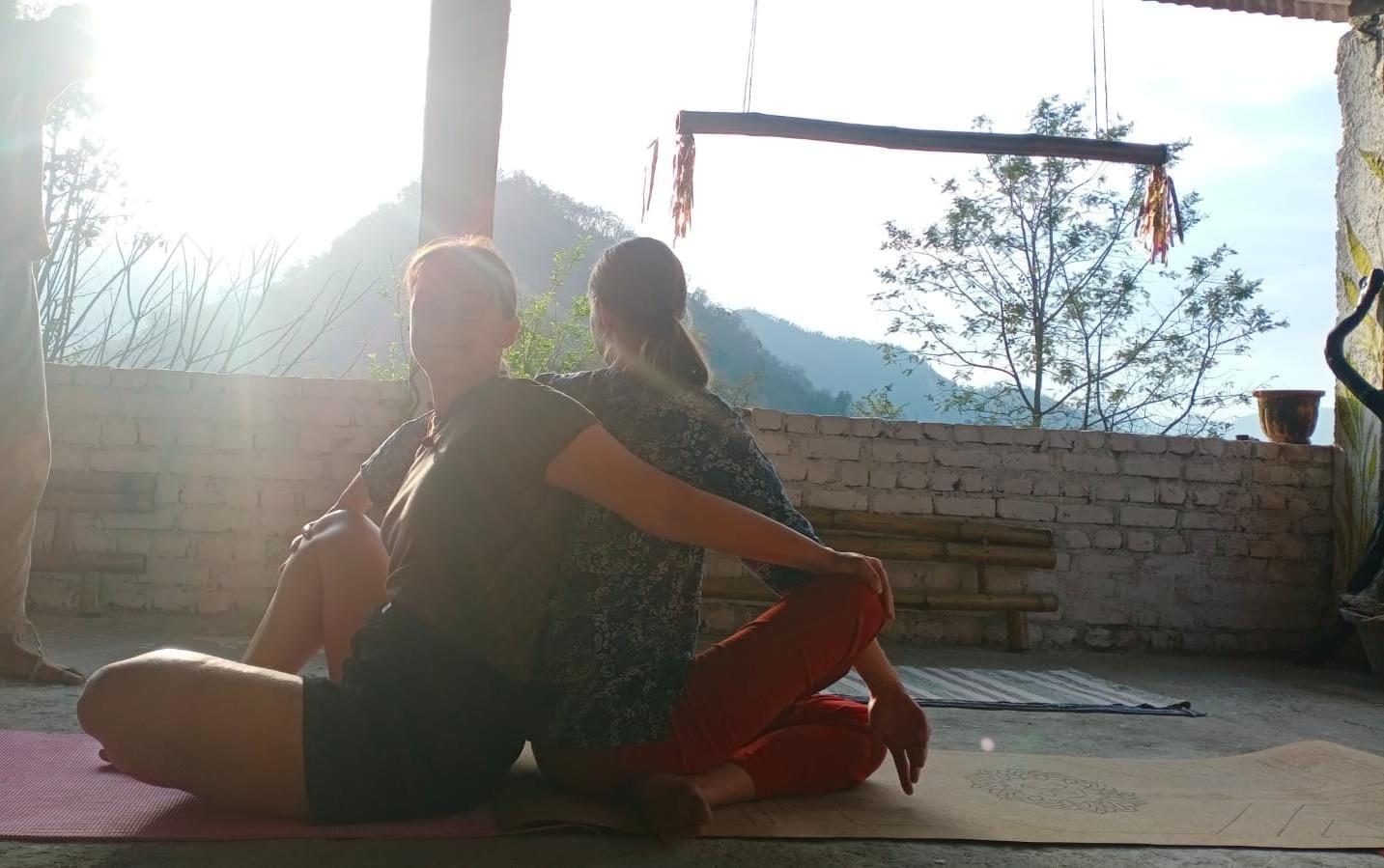
Two yoga sessions and two meditation sessions a day, three vegetarian meals, and a long free afternoon. Mornings start early and evenings end early. Across a week that is roughly fourteen hours of yoga - enough to change how you feel, not enough to leave you wrecked.
Last updated · Written by the team at Junegiri Yoga School, Rishikesh
A day, hour by hour
Times shift by half an hour or so with the season and the sunrise. The shape does not.
| What happens | |
|---|---|
| Early morning | Wake, herbal tea, meditation before the day warms up |
| Morning | The main yoga session - the longest and most physical of the day |
| Late morning | Breakfast, and the first of the long gaps |
| Midday to late afternoon | Free. Rest, the river, the garden, town, or an Ayurvedic treatment |
| Late afternoon | A softer yoga session - restorative or yin, aimed at what the morning left sore |
| Evening | Meditation, then dinner |
| After dinner | Nothing scheduled. Most people are asleep far earlier than at home |
One afternoon in the week is given to a guided excursion and an evening visit to the Ganga aarti at the river.
The bit nobody warns you about
Day three is the hard one, with striking consistency. The novelty has worn off, your body has absorbed two days of unfamiliar movement, and you are far enough from home for it to feel real. People go quiet on day three.
It passes, usually overnight. Day four is when most people report the week turning - the practice stops feeling like exercise, the early mornings stop being an imposition, and the free afternoon stops feeling like time to fill.
Knowing this in advance genuinely helps, which is why we would rather tell you here than have you conclude on day three that you have made a mistake.
The food, since everyone asks
Three Ayurvedic meals a day, fully vegetarian, plus herbal tea. Light on onion and garlic, cooked simply and eaten fresh - dal, rice, seasonal vegetables, fresh chapati, fruit. Much of it comes out of the garden here, which after the monsoon is producing heavily.
It is real food rather than diet food, and nobody goes hungry. There is no coffee culture and no alcohol on the property, which for a fair number of guests turns out to be the change they notice most by the end of the week.
What is included, and what is not
Included
Six nights on the farm, three meals a day and herbal tea, two yoga and two meditation sessions daily, one Ayurvedic massage, one guided excursion and the Ganga aarti, pickup from Rishikesh or Haridwar station, Wi-Fi and laundry.
Not included
Flights, your visa, and getting to Rishikesh. Additional Ayurvedic therapies beyond the one massage. Personal spending. Travel insurance, which we require you to hold.
Related
Other questions worth answering first
Do you need yoga experience to go on a yoga retreat?
No. A yoga retreat has no entry requirement and no assessment, and a well-run one teaches to the room rather than to a standard. If you can walk comfortably for twenty minutes you have enough to begin. Bodies that have never practised often adapt faster than stiff experienced ones.
How much does a yoga retreat in India cost?
A week-long retreat in Rishikesh typically runs $350 to $900 including accommodation and all meals. Ours is $420 twin share and $580 private. Add roughly $600 to $1,200 for flights from Europe or North America, $25 to $40 for the visa, and $60 to $150 for insurance.
When is the best time of year to do a yoga teacher training in Rishikesh?
September to November and February to April are the best months. October is the single strongest choice: warm, dry and clear after the monsoon. Avoid May and June, when the valley passes 40°C, and July to August, the monsoon, when most reputable schools do not run trainings at all.
Still deciding?
We would rather talk you out of the wrong course than sell you one. Ask us anything — including whether another school suits you better.
Or see dates and prices.