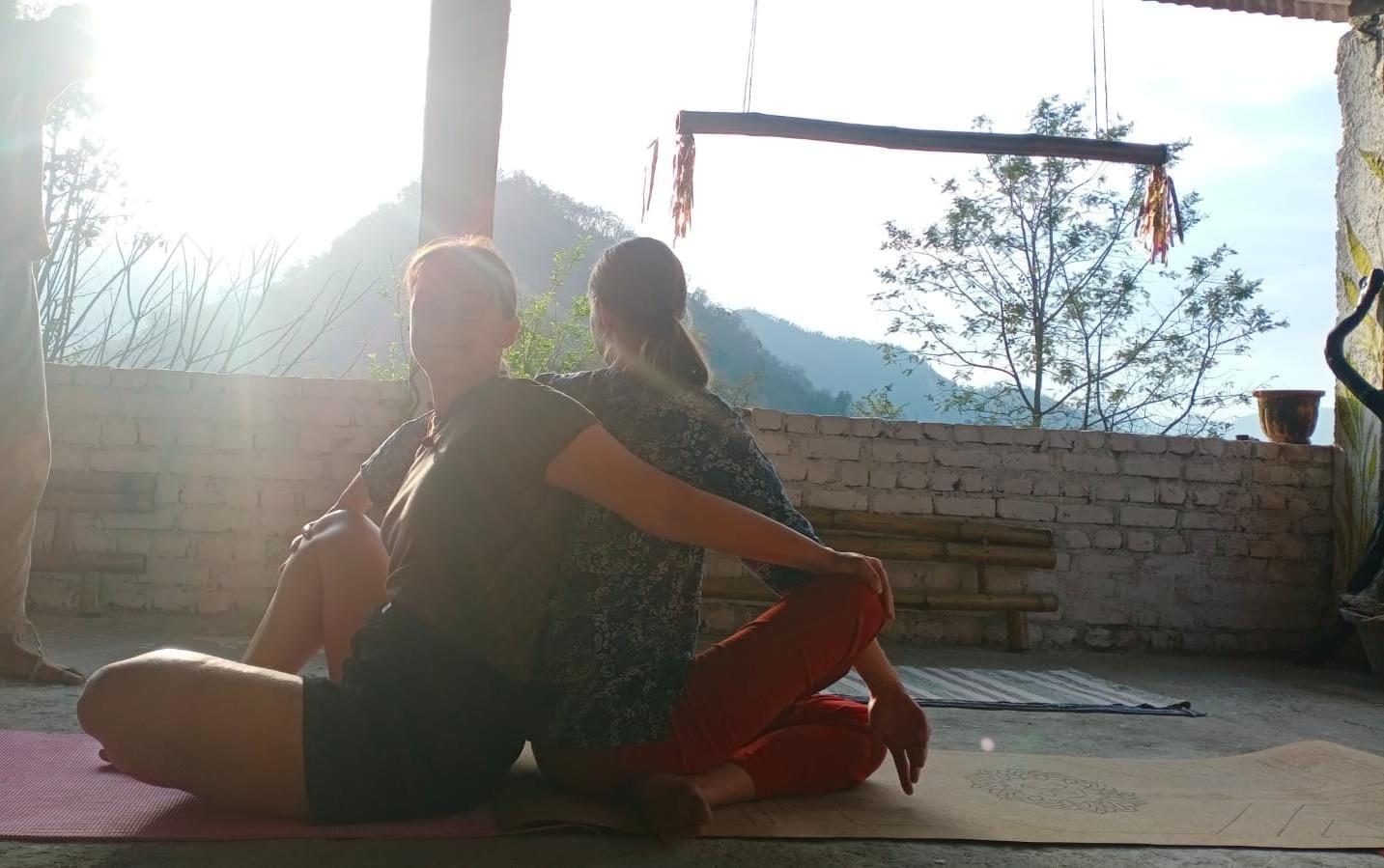
Guide
What does a yoga teacher training in India actually cost, all in?
SHORT ANSWER
Budget $1,900–$3,200 all-in for a 200-hour in India from Europe or North America. The course itself is typically $1,000–$1,600 including accommodation and all meals; flights add $600–$1,200, and visa, insurance, vaccinations and incidentals add roughly $300–$400.
Last updated · Written by the team at Junegiri Yoga School, Rishikesh
Why the advertised price is not the number that matters
Indian yoga schools quote an all-inclusive course fee covering tuition, accommodation and every meal, which is genuinely unusual and genuinely good value. It is also not what the month will cost you.
The gap between the advertised fee and the money that actually leaves your account is normally $800 to $1,600, and almost all of it is flights and the things nobody mentions until you are booking.
Full cost breakdown, 200-hour in India
Figures as of August 2026, for a traveller from Europe or North America. Course fees are for reputable residential schools in Rishikesh and Goa.
| Item | Typical range | Notes |
|---|---|---|
| Course fee (shared room) | $400–$1,600 | Includes tuition, accommodation, all meals, materials. The spread is real, not a typo |
| Private room supplement | $250–$600 | Optional. Worth it for light sleepers over a month |
| Return flights | $600–$1,200 | Cheaper Sept–Nov than Dec–Jan |
| Indian e-Tourist visa | $25–$80 | Depends on passport and duration |
| Travel insurance | $60–$150 | Get one that covers a month and names yoga |
| Vaccinations | $0–$200 | Depends what you already have |
| Airport or station transfer | $0–$60 | Often included — check, do not assume |
| Personal spending for a month | $150–$400 | Laundry, SIM, sightseeing, the odd café |
| Yoga Alliance RYT registration | $65–$115 | Only if you choose to register after graduating |
| Realistic all-in total | $1,900–$3,200 | From Europe or North America |
Indian nationals pay substantially less — most Rishikesh schools run a separate domestic rate at roughly 40–55% of the international price, and there are no flight or visa costs.
The costs schools most often leave out
Excursions and 'optional' activities
Rafting, temple trips, Ayurvedic massage. Frequently presented as part of the experience and charged separately. Ask which are included.
The certificate or the manual
Rare, but some schools charge for printed materials or for issuing the certificate itself. Ask directly.
Extra nights either side
Courses usually start and end on fixed dates that will not match your flights. Budget one or two extra nights.
Payment and currency costs
International transfers, card fees and a poor exchange rate can quietly add 2–4% to the fee. Ask what payment methods are accepted before you commit.
Is a cheaper course a worse course?
Not reliably, and we should declare an interest before answering: our own 200-hour starts at $1,075, which is near the top of the Rishikesh market. Read the rest of this section knowing that.
Plenty of Yoga Alliance registered schools here run good trainings at $549 to $799. What the lower price usually buys you is a larger group — twenty-five to forty rather than twelve to twenty — shared rooms of three or four, a rotating faculty rather than one lead teacher, and a building in Tapovan rather than land outside it. None of that makes a course bad. Some of the best-regarded schools in Rishikesh are large and inexpensive, and a big cohort suits people who want the social side of a month here.
What a higher price should buy is a smaller group, a named teacher who is present every day, better food and accommodation, and more individual attention while you learn to teach. If a school charges more than about $1,000 and cannot tell you specifically which of those you are getting, the premium is going somewhere other than your training.
The honest test is not the number. It is whether the school will answer the ten questions on our guide to choosing a school without becoming vague — and cheap schools pass that test as often as expensive ones do.
Whatever a school quotes, ask what the number does and does not include before you compare it with anything else. Ours, with the inclusions and the exclusions on the same page, are on the dates and prices page.
How people actually pay for it
Cost is only half the question. The other half is whether you can commit before you have the whole sum, and almost every school here works on a deposit and a balance — but the terms differ in ways that matter and are rarely on the pricing page. Ours are below, stated plainly so you can hold anyone else's up against them.
A deposit holds the place, not the whole fee
Ours is 20% of the total. The balance is due on arrival, so the gap between committing and paying in full is usually months rather than days — you fix the dates, then save against them.
Ask what happens if your life changes
Ours transfers to any course within twelve months, no fee and no questions. That term is worth more than a few hundred dollars off the headline, because the real risk in booking eight months out is not the price — it is a job, a visa or an injury landing in between.
Ask what happens if the school cancels
If we cancel a batch you get everything back including the deposit, or a transfer with a discount. A school that will not put its answer to this in writing has told you something.
Check which currency you are charged in
Most Rishikesh schools quote dollars and collect rupees or card payments. Between the conversion and the international transaction fee, 3–5% can disappear without appearing on any invoice. Ask before you compare two quotes.
Related
Other questions worth answering first
How do I tell a good yoga school in Rishikesh from a bad one?
Verify the lead teacher's credential in the Yoga Alliance directory, ask how many students are in a batch and how many times you will teach with feedback, and read reviews outside the school's own website. Schools that answer those three plainly are almost always the serious ones.
Rishikesh, Bali or Goa — where should I do my yoga teacher training?
Rishikesh suits people who want traditional Hatha and philosophy at the lowest cost. Bali suits people who want vinyasa, comfort and a wellness-industry network, at roughly twice the price. Goa sits between the two, with a beach setting and a shorter season. All three certify identically.
Still deciding?
We would rather talk you out of the wrong course than sell you one. Ask us anything — including whether another school suits you better.
Or see dates and prices.